
Home/ Our Services/ Deck & Log Home Staining
DECK & LOG HOME STAINING • COLORADO SPRINGS
Let the wood tell its story. Give it thoughtful care.
Deck and log home staining in Colorado Springs, with attention to the wood, its existing finish and the way it faces the weather.
Wood brings warmth to a home. Caring for it begins with understanding what is already on the surface, how it has aged and what kind of appearance you want to preserve or change.
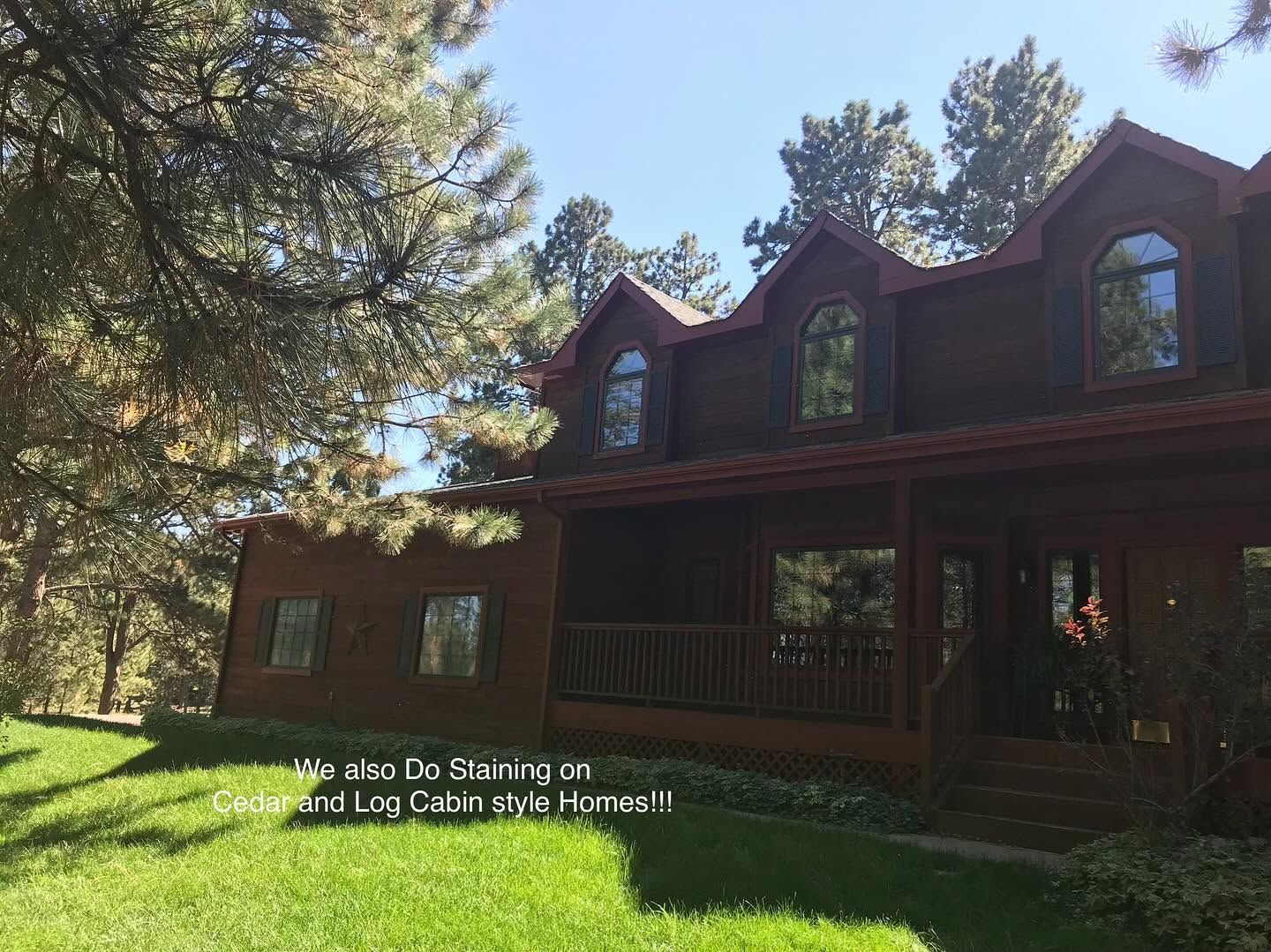
Cedar and log-style home from Carroll’s published wood-staining gallery, with the original caption preserved.
Family-owned • Colorado Springs since 1988 • A century of craftsmanship behind the work
Different wood surfaces ask different questions.
A deck you walk across and a vertical wood wall do not experience the same use. Existing coatings, weathering and exposure also affect the work. We build the conversation around those differences so the proposed preparation and finish fit the project.
Decks & Outdoor Living
Discuss walking surfaces, rails and other wood elements as distinct parts of the scope. Access, existing finish, worn areas and the time before returning furniture all belong in the plan.
Cedar Siding
Consider how much grain you want to see, the condition of the current finish and how the wood connects with trim and masonry. The look of a sample depends on the actual wood beneath it.
Log & Log-Style Homes
Review the visible wood, existing finish and details that need attention before staining. Repairs or conditions beyond the finish should be identified and discussed separately.
FROM THE CARROLL PROJECT ARCHIVE
The character of a cedar and log-style home.
This original Carroll photo was published to illustrate staining for cedar and log-cabin-style homes. It is a single project reference, shown alongside a separate cedar siding painting example to help explain two different finish directions.
Staining reference: a wood exterior with a warm, substantial character. The original published view is not a before-and-after pair.
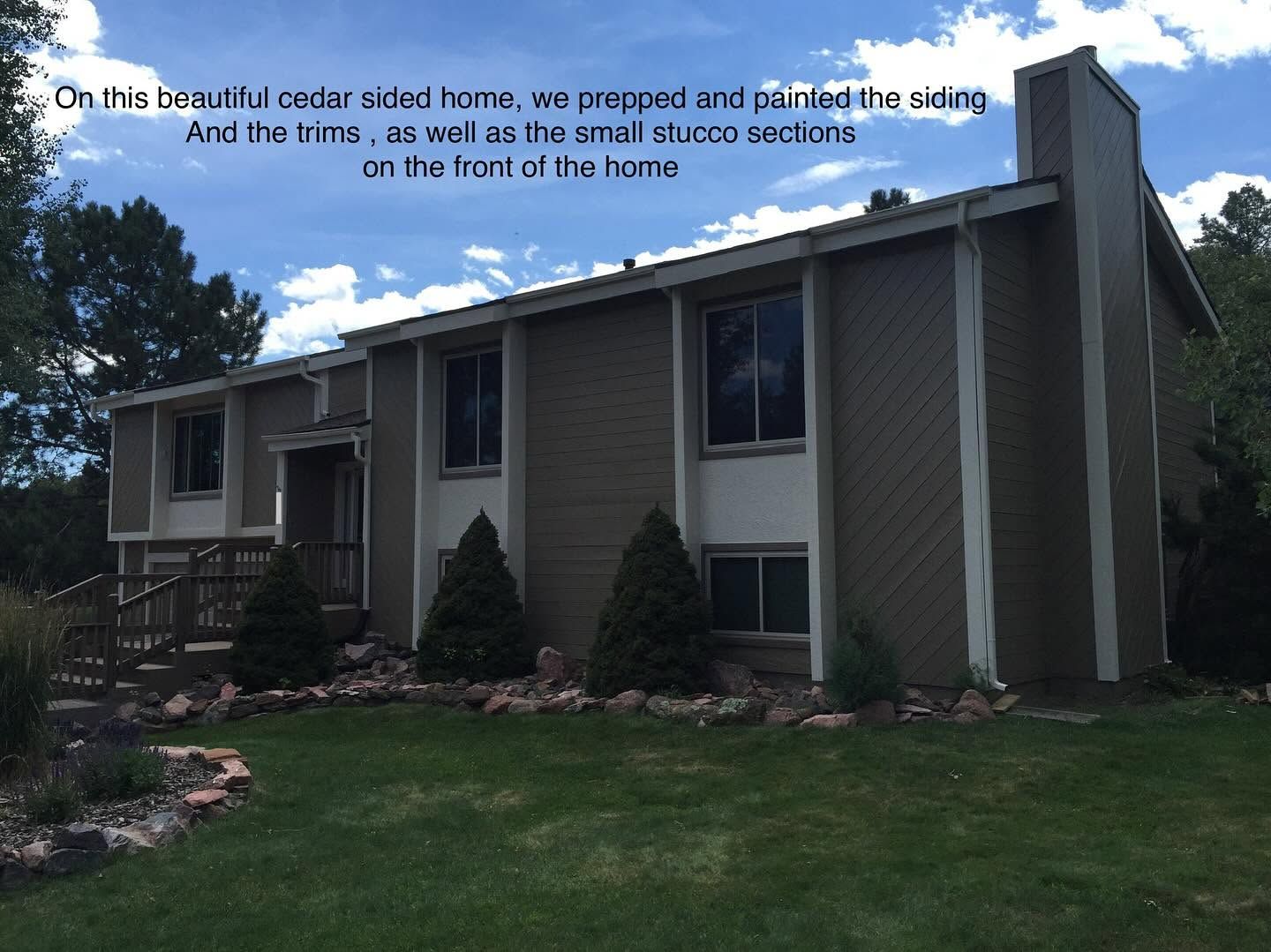
A separate approach: this archive example identifies preparation and painting of cedar siding, trim and small stucco areas. It illustrates a painted finish, not the same staining project.
Observe
Start by identifying the wood, existing coating and condition. A photograph can show a finish direction, but it cannot establish everything a surface needs.
Choose
Discuss a stained appearance versus a more opaque painted look, and the preparation required to move from the existing finish to the desired one.
Care
Plan for maintenance as part of the decision. A wood finish is an ongoing care choice, with attention guided by use, exposure and condition.
The existing finish is part of the decision.
Before selecting a stain, look at what is already on the wood. An older coating can affect both the appearance and the preparation required. Cleaning, removal of unsuitable or failing material and other preparation should be matched to the selected system.
Color on wood is a relationship between the stain and the surface beneath it. Grain, previous treatment, weathering and repaired areas can change how a finish reads. Review an appropriate sample on the project’s wood when practical, rather than relying only on a small printed color chip.
Our goal is to help you make a considered choice. Some homeowners want the wood’s variation to remain visible; others prefer a more uniform appearance. We explain the available direction and its limitations after seeing the surface.
THE WORK BEHIND THE FINISH
Thoughtful preparation. A clear path forward.
01
Review the wood
Identify the areas to be stained, current finish, worn sections and the appearance you hope to achieve.
02
Plan the preparation
Agree on cleaning and preparation, assess repairs and identify any existing coating that affects the new finish.
03
Apply in suitable conditions
Follow the chosen system’s requirements for preparation, application and drying, with attention to the site and weather.
04
Plan the return to use
Explain when the treated areas can be used and how to care for the actual finish. Walking, furniture and vehicle use are different conditions.
A CRAFT PASSED HAND TO HAND
Experience should show up in the details.
A craft passed through generations teaches respect for the material already in front of you. For wood, that means looking beyond a color name to the grain, condition and earlier work. Carroll Painting has served Colorado Springs since 1988, bringing that practical judgment to homes with very different surfaces and histories.
Know what is included before the first board is treated.
The estimate should name the surfaces included: deck boards, rails, steps, siding or other specified wood. Ask how existing coatings, damaged wood, access and adjacent surfaces will be handled.
Staining does not rebuild unsound wood or correct a structural issue. If the assessment reveals a condition outside the finish work, we explain the need for a separate repair scope. We also discuss timing and maintenance without promising that a finish eliminates future upkeep.
QUESTIONS BEFORE YOU BEGIN
Deck & Log Home Staining: helpful answers.
Can you stain over an existing finish?
That depends on the condition and compatibility of the existing finish with the proposed system. We assess the surface before deciding what preparation or removal is needed.
Will the stain color look exactly like the sample card?
Wood species, grain, weathering and earlier treatments influence the result. Reviewing a sample on the actual wood gives a more useful basis for the decision.
Do you stain both decks and log homes?
Yes. We offer deck and log home staining and discuss the preparation and finish needs of each surface separately.
Does staining repair rotted or damaged wood?
No. A coating cannot make unsound wood sound. Repair needs should be identified and addressed before treating the finish as the solution.
How often should the wood be maintained?
There is no single interval for every surface. Exposure, use, existing condition and the selected finish influence maintenance. We discuss what to watch for on your project.
When can I use my deck again?
Return-to-use timing depends on the finish, conditions and intended use. Follow the specific guidance provided for your project rather than assuming it is ready when it feels dry.
Keep exploring your project.
Exterior Painting → Siding Replacement → Exterior Maintenance Guide →
LET’S START WITH YOUR HOME OR PROPERTY
Let’s plan the next chapter for your wood surfaces.
Send a project inquiry and we’ll follow up to discuss your needs and the next steps. If you prefer to choose a walkthrough time, use our scheduling page and follow its confirmation steps.